
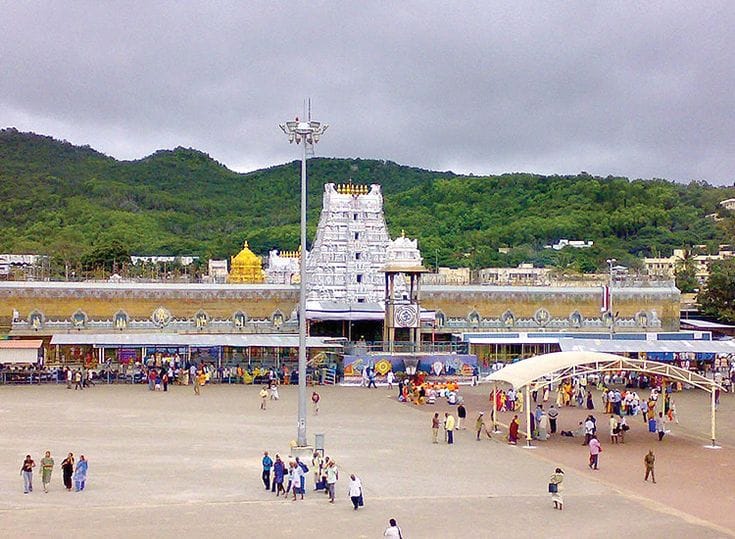
The history of the Venkateshwara Temple Tirumala is as layered as the hills it stands upon, with contributions from various dynasties over more than a millennium.
Venkateshwara Temple, Tirumala
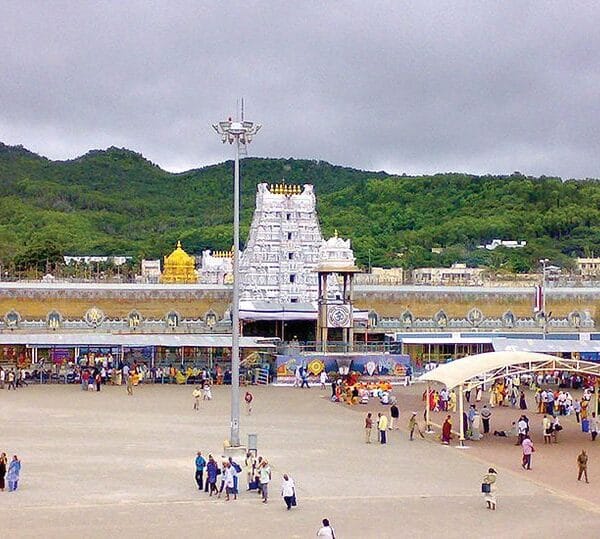
Venkateshwara temple Tirumala
Nestled amidst the serene, cloud-kissed peaks of the Seshachalam Hills in Andhra Pradesh, the Venkateshwara Temple Tirumala is not merely a place of worship; it is a phenomenon. It is a universe in itself, where faith, history, architecture, and tradition converge to create an experience that transcends the physical and touches the divine. As the most-visited holy place in the world, outranking even Vatican City or Mecca in terms of annual footfall, the temple is a testament to the unwavering devotion of millions who believe that a glimpse of Lord Venkateshwara, the Lord of the Seven Hills, can liberate one from the cycle of birth and death.
This is more than a guide; it is a journey into the heart of this sacred institution. We will explore its profound mythology, its awe-inspiring history, its architectural marvels, the intricate rituals that sustain it, and the personal experiences that define a pilgrimage to this celestial abode.
The Legend and the Lore – Why Venkateshwara temple Tirumala is Sacred
The significance of the Venkateshwara Temple Tirumala is deeply rooted in ancient Hindu scriptures, primarily the Puranas. The stories associated with it are not just tales; they are the very bedrock of its spiritual power.
The Story of Lord Venkateshwara
The most revered legend is that of Lord Vishnu taking the form of Srinivasa or Venkateshwara to answer the prayers of his devotees and to marry Princess Padmavati.
The story begins with a curse. The sage Narada once played a tune on his veena that was so enchanting it made the damsels of Svarga (heaven) dance. Seeing this, a proud Narada went to Vishnu, expecting praise. Instead, Vishnu playfully pointed out that the women were dancing to the rhythm of his (Vishnu’s) ankle bells, not Narada’s music. Enraged and humiliated, Narada cursed Vishnu that he would be separated from his consort, Lakshmi, and would need the help of mortals to reunite with her.
As the curse took effect, Vishnu, now as Srinivasa, descended to Earth and took refuge in an anthill on the Venkatadri Hill. Meanwhile, a young princess named Padmavati, who was an incarnation of Lakshmi herself, was born to King Akasa Raja. She grew up to be a beautiful and devout woman.
Srinivasa, smitten by Padmavati, sought her hand in marriage. However, the marriage required a hefty bride price. To help the divine couple, Kubera, the god of wealth, lent a massive sum of money to Srinivasa. The wedding was celebrated with great pomp, and it is this celestial union that is celebrated every year as Brahmotsavam.
To repay the debt to Kubera, it is believed that Lord Venkateshwara continues to reside in Tirumala, accepting offerings from devotees. Every donation made at the temple is seen as a contribution towards clearing this divine debt, and in return, the Lord grants boons and liberation.
The Sacred Seven Hills
Tirumala is not a single hill but a range of seven peaks, each holding immense significance:
Seshadri: Named after Shesha, the divine serpent bed of Lord Vishnu.
Neeladri: Where the temple stands. It is named after Neela Devi, a devoted worshipper.
Garudadri: Named after Garuda, the eagle mount of Vishnu, who is believed to have done penance here.
Anjanadri: The birthplace of Hanuman, the monkey god and devotee of Lord Rama (an avatar of Vishnu).
Vrishabhadri: Named after Vrishabha, the sacred bull and vehicle of Lord Shiva, who performed penance here.
Narayanadri: Where the sage Narada meditated to seek the vision of the Lord.
Venkatadri: The hill on which the main temple is located. The name ‘Tirumala’ is derived from the Tamil words ‘Tiru’ (holy) and ‘Mala’ (hill).
The act of pilgrimage often involves acknowledging these seven hills, symbolizing a journey through various spiritual stages before reaching the ultimate goal—the darshan of the Lord.
A Walk Through Time – The History of the Temple
The history of the Venkateshwara Temple Tirumala is as layered as the hills it stands upon, with contributions from various dynasties over more than a millennium.
Early Mentions and Sangam Period (500 BCE – 300 CE)
The earliest references to the Tirumala Hills can be found in Tamil Sangam literature, dating back over 2000 years. The hill was referred to as “Venkadam” and was already a revered site.
The Pallava and Chola Era (9th – 10th Century)
The first recorded endowments to the temple were made by the Pallava queen Samavai in 966 CE. She donated jewels and allocated land for the perpetual conduct of worship and festivals. The Chola dynasty, which succeeded the Pallavas, also made significant contributions, further establishing the temple’s prominence.
The Vijayanagara Empire (14th – 17th Century)
This was the golden era for the Venkateshwara Temple Tirumala. Emperors like Krishnadevaraya were ardent devotees who visited the temple multiple times and donated immense wealth in the form of gold, jewels, and land. They expanded the temple complex, built towering gopurams (gateway towers), and established many of the administrative protocols that, in spirit, still guide the temple today. The stunning gold-covered Vimana (dome over the sanctum) is largely a gift from Krishnadevaraya.
Post-Vijayanagara and the Modern Era
After the fall of the Vijayanagara Empire, the temple continued to receive patronage from various kingdoms, including the Marathas and the Kingdom of Mysore. During British rule, the temple was managed by a committee, and its administration saw several changes.
In 1933, the Tamil Nadu legislature passed a special act, bringing the administration of the temple under a statutory body. After the formation of Andhra Pradesh, the Tirumala Tirupati Devasthanams (TTD) was established in 1951. TTD is the autonomous body that now manages the sprawling activities of the temple, from organizing pilgrim services and accommodations to overseeing the complex rituals and managing the vast resources for charitable and religious purposes.
Architectural Splendor – More Than Just Stone and Mortar
The architecture of the Venkateshwara Temple Tirumala is a magnificent blend of the Dravidian and Vijayanagara styles. Every pillar, every corridor, and every tower is imbued with symbolic meaning and artistic grandeur.
The Temple Layout
The temple complex is like a small city. Pilgrims enter through the Mahadwaram (main gateway), which leads to a series of concentric courtyards.
Sampangi Pradakshinam: The outer circumambulation path.
Ranga Mandapam: A large pavilion used for cultural performances and ceremonies.
Tirumamani Mandapam: The main entrance to the inner courtyard.
The Inner Gopuram: This towering structure, plated with gold, marks the entrance to the most sacred precincts.
The Sanctum Sanctorum – The Ananda Nilayam
The heart of the temple is the Ananda Nilayam (Abode of Bliss), the sanctum that houses the majestic deity of Lord Venkateshwara. The deity is a standing figure, about 8 feet tall, carved from a single block of black granite. The atmosphere inside is electric, charged with the chants of “Govinda! Govinda!” and the palpable faith of thousands.
The Vimana: The dome over the sanctum is covered in gold plates and is known as the Ananda Nilaya Divya Vimana. It is one of the most striking features of the temple, glistening in the sun and visible from miles away.
The Deity: The iconography of the Lord is unique. He wears a gold crown, has a thick double chin, and his eyes are covered by a curtain of jewels. He holds a discus (Chakra) and a conch (Shankha) in his upper two hands. His lower right hand is in the Varada (boon-giving) pose, and his lower left hand points to his feet, signifying surrender as the path to liberation.
Other Key Structures
Bangaru Vakili: The golden doorway that leads from the Tirumamani Mandapam into the sanctum sanctorum.
Venkateshwara temple Tirumala Shrine: Located behind the main sanctum, this shrine is crucial for the daily worship rituals.
The Hundred-Pillar Mandapam: A beautifully carved hall built by the Vijayanagara kings, showcasing exquisite sculptures depicting scenes from Hindu epics.
The Divine Darshan – Rituals, Offerings, and Pilgrim Experience
A visit to the Venkateshwara Temple Tirumala is a meticulously organized spiritual journey, designed to manage the immense crowds while preserving the sanctity of the worship.
The Rituals of the Day
The Lord is treated as a living emperor. His day begins at 2:30 AM with Suprabhatam (waking up prayers) and ends at 1:00 AM the next day after Ekantha Seva (the last ritual putting the deity to sleep). In between, there are nearly 20 rituals, each with its own significance:
Thomala Seva: The waving of fragrant camphor and flowers before the deity.
Sahasra Deepalankarana Seva: Waving of a thousand oil lamps.
Kalyanotsavam: The most popular seva, a symbolic re-enactment of the celestial wedding of Lord Venkateshwara and Goddess Padmavati.
Types of Darshan and Sevas
TTD offers various modes of darshan to cater to the different needs of the millions of pilgrims:
Sarva Darshan (Free Darshan): The general queue, available to all pilgrims free of cost. The wait can range from a few hours to over 20 hours during peak seasons.
Special Entry Darshan (Seeghra Darshan): A paid, faster-moving queue.
Sudarshan Token System: A token-based system that allocates a specific time slot for darshan, significantly reducing physical waiting time.
Sevas: Paid rituals that allow smaller groups of devotees to witness the ceremonies up close. These include Archana, Asthadala Pada Padmaradhana, and the prestigious Vasanthotsavam and Brahmotsavam.
The Pilgrim’s Journey: From Venkateshwara temple Tirumala
The journey typically begins in the town of Tirupati at the foothills. Pilgrims can reach the hilltop, a distance of about 20 km, via a scenic ghat road by bus, or by their own vehicles. For the devout, the ancient path of Alipiri Mettu, a footpath consisting of over 3,500 steps, is the preferred route. Many pilgrims climb these steps barefoot as an act of penance and devotion.
The Sacred Offerings
The most famous offering at the temple is the hair—Mokku. Millions of devotees, including infants, tonsure their heads as a sacrifice to the Lord. The belief is that this act symbolizes the surrender of one’s ego. The collected hair is sold by TTD, generating significant revenue used for the temple’s charitable activities.
Another key offering is the Laddu Prasadam. The sweet, delicious laddu made within the temple kitchen is world-famous and is considered highly auspicious. The preparation of this prasadam is a massive operation in itself, using tons of ingredients daily.
Beyond the Main Shrine – Venkateshwara temple Tirumala
The Venkateshwara Temple Tirumala is the center of a vast spiritual and charitable universe managed by TTD.
Other Temples in the Complex
Sri Varahaswami Temple: Located on the northern bank of the Swami Pushkarini lake, this temple to Lord Vishnu’s boar avatar is considered a Kshetrapalaka (guardian deity) of the main temple. It is customary to visit this temple before visiting the main shrine.
Venkateshwara temple Tirumala: A temple dedicated to Hanuman in a unique posture, located near the Alipiri footpath entrance.
Sri Padmavati Temple, Tiruchanur: Located in Tirupati, this temple is dedicated to Goddess Padmavati, the consort of Lord Venkateshwara. Pilgrims visit this temple to complete their pilgrimage.
The Role of TTD
Tirumala Tirupati Devasthanams is one of the richest religious organizations in the world. Its mandate, however, extends far beyond temple management. TTD is a massive philanthropic enterprise:
Annadanam: It runs the world’s largest free food program, serving thousands of meals to pilgrims every day.
Educational and Healthcare Institutions: It manages universities, colleges, hospitals, and clinics.
Publications and Propagation: TTD publishes religious texts, promotes Vedic learning, and runs satellite temples across India and the world.
The Grandest Festival – Brahmotsavam
The annual Brahmotsavam is the pinnacle of the temple’s festival calendar. Lasting for nine days, it is a spectacular celebration that attracts over half a million devotees.
According to legend, the festival was first conducted by Brahma, the creator god, to thank Lord Venkateshwara for saving his life. Hence the name, ‘Brahma’s Utsavam’.
Each day is marked by a different ritual, but the highlight is the procession of the Lord’s utsava murti (processional deity) on various vahanas (vehicles) around the four streets of the temple. Each vahana has deep symbolic meaning:
Sesha Vahanam: Serpent Adishesha, representing cosmic balance.
Hamsa Vahanam: The swan, symbolizing discernment.
Simha Vahanam: The lion, representing power.
Kalpavriksha Vahanam: The wish-fulfilling tree, symbolizing prosperity.
Sarva Bhoopala Vahanam: The vehicle of all kings, signifying universal sovereignty.
Garuda Vahanam: The eagle, the most majestic of all, occurring on the fifth day.
The festival concludes with the Rathotsavam (chariot festival), where the deity is pulled in a giant, wooden chariot by thousands of devotees, and the Chakrasnanam, a holy bath for the deity.
The Eternal Pull of the Seven Hills
The Venkateshwara Temple Tirumala is a miracle of faith. It is a place where ancient traditions are not just preserved but are vibrantly alive, pulsating with the energy of millions. It is a testament to human devotion and divine grace, where the material and the spiritual seamlessly intertwine.
To call it a tourist attraction would be a profound understatement. It is a pilgrimage—a transformative journey that challenges the body, focuses the mind, and uplifts the soul. Whether it is the arduous climb up the steps, the long wait in the queue, the breathtaking first glimpse of the glittering Vimana, or the heart-stopping moment of eye contact with the deity for those few precious seconds, the experience leaves an indelible mark.