Diwali Rangoli Designs Simple Rangoli Designs for Diwali Rangoli Design Simple Flower Rangoli Ganesha Rangoli / Ganpati Rangoli Designs Lakshmi 3D Rangoli Designs
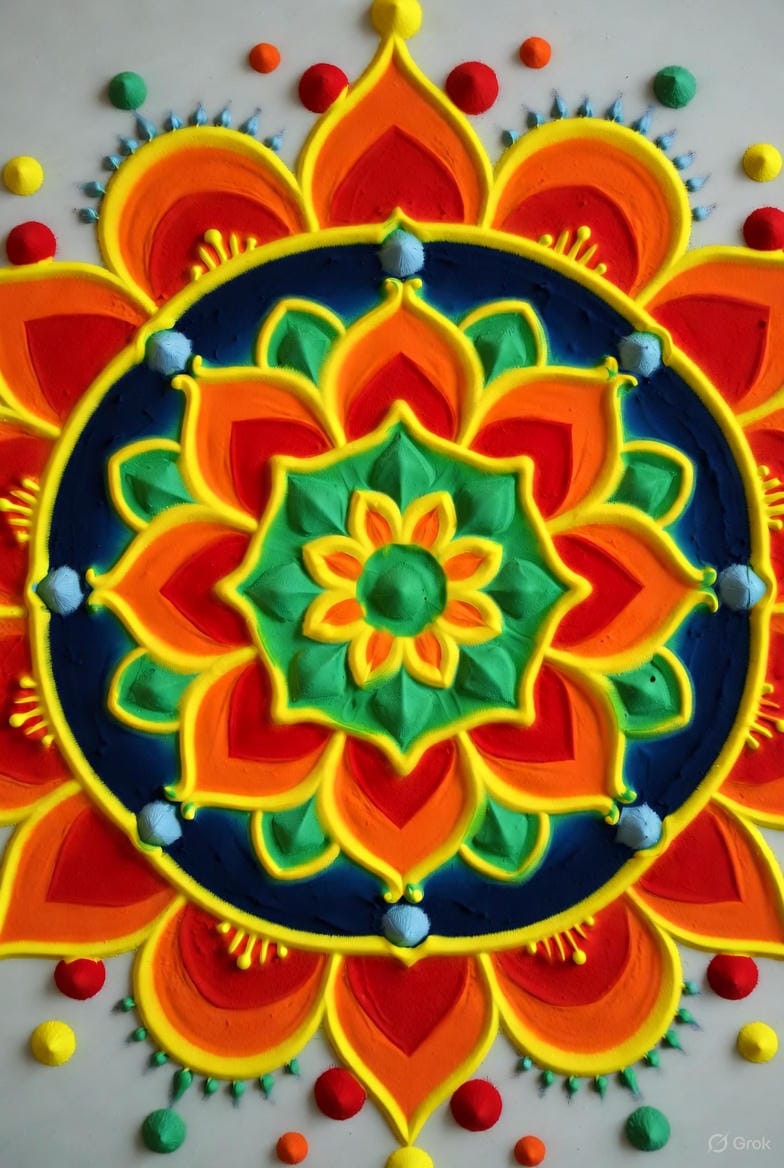
Diwali, the Festival of Lights, is a time of joy, prosperity, and breathtaking beauty. Homes sparkle with the glow of diyas, the aroma of festive sweets fills the air, and vibrant colors come alive on doorsteps and courtyards. At the heart of this visual splendor lies the ancient art form of Rangoli. More than just a decoration, a Diwali Rangoli design is an invitation to divinity, a symbol of good fortune, and a heartfelt expression of artistic devotion.
This comprehensive guide will take you on an expansive journey through the world of Diwali Rangoli Designs, exploring their history, significance, diverse styles, techniques, and offering inspiration for every skill level, from the absolute beginner to the seasoned artist. We’ll delve into the latest trends, classic masterpieces, and even peek into what might inspire Diwali Rangoli Designs 2025.
Diwali Rangoli Designs
The Soul of Diwali: Why Rangoli Matters
To understand Rangoli is to understand a core aspect of Hindu philosophy and celebration. The word “Rangoli” is derived from the Sanskrit word “Rangavalli,” meaning a creep of colors. It’s an ephemeral art, created daily in many South Indian homes as a ritual and specifically for festivals across India.
Spiritual Significance: Rangolis are believed to welcome deities, especially Goddess Lakshmi, into the home. The intricate patterns and bright colors are thought to create a positive vibration and act as a sacred welcoming mat for divine energies. Each dot and line is imbued with intention, transforming a simple pattern into a powerful spiritual tool. The act of creating a Rangoli is often seen as a form of meditation, a focused and mindful activity that brings peace and happiness.
Cultural Heritage: Rangoli is a living tradition, passed down through generations. Grandmothers teach their daughters, who in turn teach their own children, ensuring that the art form continues to thrive. It’s a testament to India’s rich cultural tapestry, with each region boasting its unique styles, patterns, and materials.
Aesthetic Appeal: Beyond spirituality, Rangoli simply makes spaces beautiful. During Diwali, when every corner of the home is illuminated, a vibrant Diwali Rangoli design serves as a focal point, drawing the eye and uplifting the spirit. It transforms a mundane threshold into a festive gateway.
The Evolution of Diwali Rangoli Designs: From Ancient Ritual to Modern Art
While the core principles remain, Rangoli has evolved significantly. Historically, they were made using natural materials like rice flour, pulverized limestone, or natural dyes. These were not just for aesthetic appeal but also served a practical purpose – the rice flour would feed tiny ants and birds, symbolizing a connection with nature and the sharing of blessings.
Today, while natural materials are still cherished, synthetic colored powders, flowers, lamps, and even glitter have become common. The designs have also expanded, incorporating contemporary themes, intricate motifs, and even three-dimensional effects. The blend of tradition with innovation ensures that Diwali Rangoli Designs remain relevant and exciting.
Mastering the Art: Techniques and Materials for Your Diwali Rangoli Design
Creating a Rangoli can seem daunting, but with the right approach, anyone can craft a beautiful piece of art.
Traditional Materials:
- Rice Flour (White or Colored): Ground rice flour is the most traditional base, symbolizing purity and offering food to small creatures. It can be dyed with natural colors.
- Dry Colors (Powdered Pigments): Widely available in vibrant shades, these are the most common choice today.
- Flower Petals: For stunning, fragrant, and eco-friendly designs.
- Sand: Used in some regions, especially for outdoor Rangolis.
- Grains and Pulses: Creates unique textures and earthy tones.
Modern Tools and Aids:
- Squeezing Bottles/Cones: For precise lines and intricate details.
- Stencils: Perfect for beginners to achieve complex patterns easily.
- Dots and Combs: To create symmetrical patterns and textures.
- Diyas (Oil Lamps) and Candles: To illuminate the Rangoli, especially crucial for Diwali Rangoli Designs.
- Glitter and Decorative Stones: For added sparkle and grandeur.
Basic Techniques:
- Freehand: The most challenging but rewarding method, requiring a steady hand and artistic vision.
- Dot Method (Chukkala Muggulu/Pulli Kolam): Popular in South India, this involves creating a grid of dots and then connecting them with lines and curves. Excellent for geometric precision.
- Stencil Method: Place a stencil on the floor, sprinkle color over it, and lift carefully. Great for complex shapes with minimal effort.
- Sieving Method: For large areas, pour color through a sieve to create an even layer.
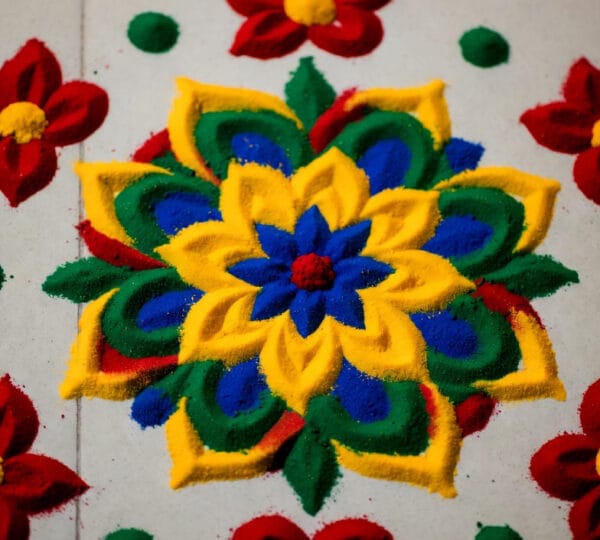
- Finger Drawing: Using your index finger and thumb to pinch and release powder, creating lines and filling areas.
Diwali Rangoli Designs
Diwali Rangoli Designs Simple and Beautiful: Embracing Elegance with Ease
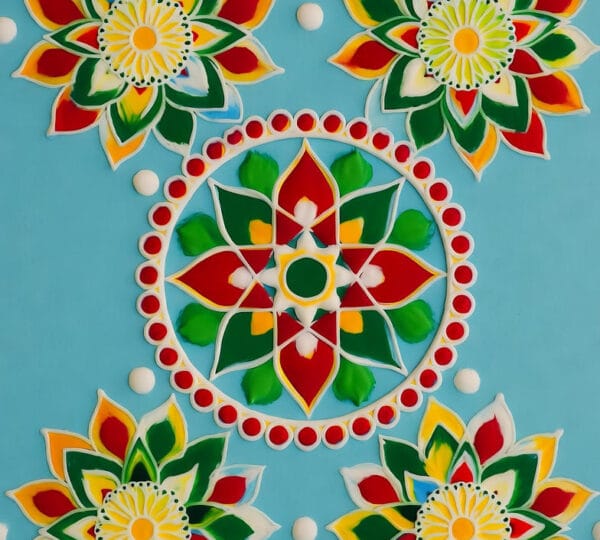
You don’t need to be an expert to create a captivating Diwali Rangoli design. In fact, some of the most charming designs are those that are Diwali Rangoli Designs simple and beautiful. These designs focus on clean lines, fewer colors, and recognizable motifs, making them perfect for beginners or those with limited time.
Ideas for Simple and Beautiful Rangoli:
- Single Diya Motif: A large, central diya outline filled with contrasting colors, surrounded by a simple border.
- Floral Outline: A single large flower (like a lotus or marigold) with bold petals. Fill it with two or three complementary colors.
- Auspicious Symbols: A Swastika, Om, or Shubh Labh symbol encircled by a simple wreath-like pattern.
- Concentric Circles: Easy to create with a string and a piece of chalk for perfect circles, then fill with alternating colors.
- Geometric Squares/Triangles: Simple, interlocking shapes that create a modern, minimalist look.
- Corner Designs: Ideal for smaller spaces. A single peacock feather or a small floral vine in a corner can be incredibly elegant.
The key to a Diwali Rangoli design simple and beautiful is often thoughtful color choice and neat execution. Even a single color used effectively can create a stunning impact.
Diwali Rangoli Designs for Home: Making Your Abode Shine Bright
The Rangoli you choose for your home often reflects your personal style and the space available. Unlike competitive designs, home Rangolis are about creating a welcoming, festive atmosphere.
Placement Ideas for Home Rangolis:
- Main Entrance: The most traditional spot to welcome guests and deities.
- Pooja Room (Prayer Room): A smaller, sacred design to enhance the spiritual ambiance.
- Living Room Centerpiece: A larger, more intricate design if you have open floor space.
- Balcony/Terrace: For a subtle festive touch visible from outside.
- Under the Tulsi Plant: A small, delicate design around the holy basil plant.
When selecting Diwali Rangoli Designs for home, consider the overall decor and color scheme. Opt for patterns that complement your interior rather than clashing with it. Designs that incorporate traditional motifs like diyas, footprints of Lakshmi, or auspicious symbols are always a hit. A Diwali Rangoli design that wraps around a potted plant or a cluster of diyas can also create a beautiful effect.
Diwali Rangoli Designs for Competition: Reaching for Artistic Excellence
For those with a competitive spirit and a flair for artistry, Diwali Rangoli Designs for competition are an entirely different ballgame. These demand precision, creativity, originality, and often, sheer scale.
Key Elements of Competition-Worthy Rangolis:
- Originality: Judges look for unique concepts and interpretations.
- Complexity & Intricacy: Highly detailed patterns, fine lines, and elaborate motifs.
- Color Harmony: A sophisticated understanding of color theory, using a wide palette effectively.
- Symmetry & Proportion: Flawless execution of balanced designs.
- Theme Adherence: If there’s a specific theme, how well the design integrates it.
- Neatness & Finish: Clean edges, smooth fills, and overall polished appearance.
- Use of Materials: Innovative use of traditional and modern materials, sometimes incorporating 3D elements, mirrors, or even small idols.
- Storytelling: A design that tells a story or evokes a strong emotion can stand out.
Tips for Competitive Rangoli Artists:
- Plan Ahead: Sketch your design on paper first.
- Practice Sections: Master difficult parts before attempting the full Rangoli.
- Use High-Quality Colors: For vibrant and consistent results.
- Work in Layers: Start with outlines, then fill in, and add details last.
- Consider Lighting: How will your Rangoli look under competition lights?
- Time Management: Rangolis can take hours; pace yourself.
Competitive Rangolis often push the boundaries of the art form, showcasing incredible talent and dedication. These are often the designs that inspire the Diwali Rangoli Designs new trends we see emerging each year.
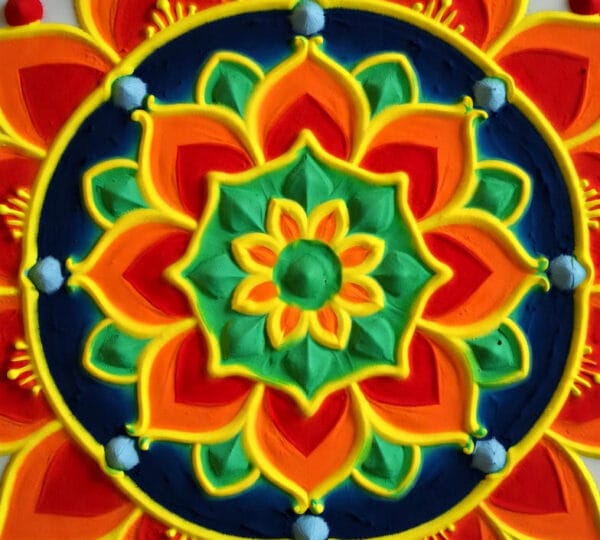
Diwali Rangoli Designs
Diwali Rangoli Designs with Flowers: Nature’s Own Masterpiece
Using fresh flowers for Rangoli is an incredibly beautiful, fragrant, and environmentally friendly option. Diwali Rangoli Designs with flowers create a rich texture and vibrant natural hues that powdered colors sometimes cannot replicate.
Popular Flowers for Rangoli:
- Marigolds (Genda Phool): Their bright orange and yellow petals are synonymous with Indian festivals.
- Roses: Petals available in various shades of red, pink, and white.
- Jasmines (Mogra): For delicate white patterns and a heady fragrance.
- Chrysanthemums: Available in yellow, white, and purple.
- Lotus: Though harder to source, whole lotus flowers or petals make a stunning statement.
- Leaves: Green leaves can be used for contrast or as outlines.
Tips for Flower Rangoli:
- Choose Fresh Flowers: They last longer and look vibrant.
- Separate Petals Carefully: To avoid bruising.
- Create a Base (Optional): You can draw an outline with chalk or even dry colored powder first, then fill it with petals.
- Layering: Overlapping petals can create a sense of depth.
- Combine with Diyas: The soft glow of diyas beautifully complements the natural beauty of flowers.
A Diwali Rangoli design with flowers offers a unique sensory experience, combining visual appeal with a delightful aroma, making it a truly immersive part of your Diwali celebrations.
Diwali Rangoli Designs New: What’s Trending and What to Expect in 2024 & 2025
The world of Rangoli is dynamic, with artists constantly innovating. While traditional motifs will always be cherished, Diwali Rangoli Designs new often incorporate contemporary aesthetics and modern techniques.
Current and Emerging Trends:
- 3D Rangoli: Using shading techniques, elevated elements, or even actual objects (like small pots or figurines) to create a three-dimensional effect.
- Water Rangoli / Floating Rangoli: Designs made on a surface of water, often illuminated by floating candles. These are incredibly elegant.
- Theme-Based Rangoli: Designs that tell a story, perhaps depicting a scene from the Ramayana or a message about unity or peace.
- Minimalist Rangoli: Less is more. Clean designs with one or two dominant colors and striking negative space.
- Portrait Rangoli: Highly skilled artists creating realistic portraits of deities or iconic figures.
- Glitter & Stone Embellishments: Adding sparkle and texture to traditional designs for a modern twist.
- Abstract Designs: Moving away from traditional motifs to create artistic, free-flowing patterns.
- Eco-Friendly Rangoli: A growing emphasis on using natural, biodegradable materials like flowers, leaves, pulses, and naturally dyed rice flour. This trend is likely to continue to influence Diwali Rangoli Designs 2024 easy and beautiful and even Diwali Rangoli Designs 2025.
Diwali Rangoli Designs 2024 easy and beautiful will likely see a blend of traditional motifs with simplified modern execution. Expect to see more use of stencils for intricate patterns, combined with vibrant color palettes. The focus will be on achieving maximum visual impact with approachable techniques. For those looking ahead to Diwali Rangoli Designs 2025, anticipate further innovations in 3D effects, personalized themes, and an even stronger push towards sustainable materials, perhaps even incorporating augmented reality elements for interactive Rangoli experiences in the future!
Creating a Diwali Rangoli Design Step-by-Step (The Human Touch)
Let’s walk through the process of creating a beautiful Diwali Rangoli design with a human touch, focusing on a slightly intricate yet achievable pattern.
- Preparation is Key:
- Clean Surface: Sweep and mop the area where you intend to draw your Rangoli. A smooth, clean surface is crucial.
- Gather Materials: Decide on your colors, any stencils, diyas, or flowers you want to use. Lay them out within easy reach.
- Rough Sketch (Optional but Recommended): On a piece of paper, sketch your desired design. This helps visualize and plan color placement. For our example, let’s aim for a central floral motif with a surrounding border.
- Outline the Core Design:
- Center Point: Find the exact center of your chosen area. You can use a chalk or a small dot of white powder.
- Initial Shape: From the center, begin to draw your primary motif. If it’s a flower, start with the innermost petals. Use a white or light-colored powder (like a light yellow or pink) for the outlines. Use your index finger and thumb to release the powder slowly and steadily. Don’t worry if the lines aren’t perfect; minor imperfections add charm!
- Symmetry Check: If your design is symmetrical, step back periodically to ensure balance. For a circular design, you can use a string tied to the center to guide your outline.
- Expand and Embellish:
- Add Layers: Around your central motif, start adding concentric circles, wavy lines, or additional smaller designs like leaves or peacocks. This is where your Diwali Rangoli design truly begins to grow.
- Consider the Border: Think about how you want to frame your Rangoli. A simple wavy line, a series of small triangles, or a repetitive floral pattern can act as a beautiful border.
- Dots for Precision: For intricate sections, lay down small dots first, then connect them with thin lines. This technique is often used in Diwali Rangoli Designs with dots.
- The Art of Coloring:
- Start from the Inside Out: Begin filling colors in the innermost parts of your design and work your way outwards. This prevents smudging previously filled areas.
- Choose Your Palette: Select colors that complement each other. Traditional Diwali colors include red, orange, yellow, green, pink, and white. Don’t be afraid to experiment! A vibrant Diwali Rangoli design comes alive with contrasting hues.
- Technique: Gently pinch the colored powder between your thumb and index finger and release it slowly and evenly to fill in areas. For larger areas, you can use a sieve.
- Layering Colors: For a shaded effect, you can sprinkle a darker shade lightly over a lighter shade.
- Diwali Rangoli Designs with flowers can be incorporated here. Once you’ve laid down your powder colors, carefully place flower petals within designated areas for a stunning textural effect.
- Adding the Finishing Touches:
- Outline Refinement: Once all colors are filled, you can go back and refine the outlines with a thin line of white powder for sharpness.
- Sparkle & Shine: Add glitter, small mirror pieces, or decorative stones to enhance the festive look.
- The Glow of Diyas: Strategically place lit diyas or small candles around and within your Diwali Rangoli design. This is perhaps the most magical step, as the flickering light brings the entire artwork to life, creating that quintessential Diwali ambiance. For Diwali Rangoli Designs 2024 easy and beautiful, simply outlining a beautiful Rangoli with diyas can be incredibly effective.
- Enjoy and Reflect:
- Step back and admire your creation. The act of making Rangoli is a celebration in itself. It’s about the joy of creation, the beauty of tradition, and the spirit of Diwali.
This human-centric approach emphasizes the joy and personal involvement in creating a Diwali Rangoli design. Each line, each color, each placed diya reflects the love and dedication poured into celebrating this auspicious festival.
Beyond the Powders: Other Unique Rangoli Ideas
While powdered Rangoli is classic, here are other creative expressions to consider:
- Chalk Rangoli: Perfect for outdoor concrete surfaces. Easy to clean.
- Rice Flour Paste Rangoli (Alpana/Kolam): Using a thick rice flour paste applied with fingers for distinct, often white, patterns, particularly in Bengal and South India.
- Fabric/Bandhani Rangoli: Using fabric pieces or Bandhani printed cloth to create a Rangoli pattern, a non-permanent and reusable option.
- Pulses and Grains Rangoli: Lentils, rice, beans, and seeds of various colors create an organic and textured look.
- Salt Rangoli: Fine salt crystals can be colored and used similarly to powder.
The Lasting Impression of Diwali Rangoli Designs
As the glow of Diwali gradually fades, so too does the ephemeral beauty of the Rangoli. Yet, its impact lingers. It’s a reminder of tradition, creativity, and the power of art to bring people together. Each year, families anticipate the chance to recreate these beautiful patterns, to embrace the joy and positivity they bring.
From the simplest circle drawn by a child to the most elaborate competitive masterpiece, every Diwali Rangoli design carries with it the spirit of the festival – a welcoming light, a prayer for prosperity, and a burst of color in a world that always needs more vibrancy. Whether you’re planning your intricate layout for Diwali Rangoli Designs 2024 easy and beautiful or already envisioning grand patterns for Diwali Rangoli Designs 2025, the essence remains the same: to celebrate, to connect, and to create beauty.